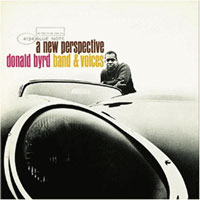
| Donald Byrd: "A New Perspective" (BLP 4124, Feb. 1964) |

 Mehr ...
Natürlich nicht neu, aber eine Platte, die eine Hervorhebung mehr als verdient. Und sich bei dem Preis jetzt problemlos und ohne Reue in die Sammlung integrieren lässt. Erschienen in der Blue Note Rudy Van Gelder-Remaster Serie, also klanglich absolut top. Van Gelder hat 1963 in seinem Tonstudio für die Aufnahmen gesorgt und sie vor ein paar Jahren mit 24-Bit-Technologie selbst restauriert und remastert.
Aber nun zur Musik. Ich bin weder Jazzkenner noch –Fan. Das wird auch nichts mehr. Aber was Donald Byrd und sein Septett um Hank Mobley (Sax), Kenny Burrell (Gitarre) und Herbie Hancock (Piano) für A New Perspective einspielten, lässt mich noch ein jedes Mal dahinschmelzen. Tatsächlich ist das Album so etwas wie „eine neue Sichtweise“, denn die Songs sind einfach und klar strukturiert, die solistischen Ausflüge den Songs angemessen und wenn Donald Byrd im einfach göttlichen Christo Redentor (der Song, den ich auf meiner Beerdigung hören will) zum Trompetensolo ansetzt, dann erfasst mich ein Wohlgefühl, wie ich es nur selten hatte in 35 Jahren aktivem Musikhören. Und ich bin eigentlich jemand, der Trompetensoli in Musik nicht braucht.
Was diese Aufnahmen über das Übliche hinweg hebt, ist die Integration eines 8-köpfigen Gospelchores, den Duke Pearson innovativ arrangierte. Die Damen sind nur lautmalerisch zu hören und befördern A New Perspective in eine andere Umlaufbahn. Diese Stimmung, dieses Gefühl, das ist nicht von dieser Welt! Das ist einzigartig! Das ist wunderschön! Das ist so bezwingend, wie Musik nur sein kann! Upliftend im wahrsten Sinne des Wortes. Als ich Christo Redentor das erste Mal hörte, ich stand in der Mittagssonne vor Norman Jay’s Good Times Bus beim Londoner Notting Hill Carnival, glaubte ich tatsächlich zu schweben!
(Glitterhouse)
This unusual set (reissued on CD by Blue Note) was one of the most successful uses of a gospel choir in a jazz context. Trumpeter Donald Byrd and a septet that also includes tenor saxophonist Hank Mobley, guitarist Kenny Burrell, and pianist Herbie Hancock are joined by an eight-voice choir directed by Coleridge Perkinson. The arrangements by Duke Pearson are masterful and one song, "Cristo Redentor," became a bit of a hit. This is a memorable effort that is innovative in its own way, a milestone in Donald Byrd's career.
(by Scott Yanow, All Music Guide)
This album is arguably Motor City trumpeter Donald Byrd’s greatest: an inspired coalescence of hard bop and African American sacred music. Herbie Hancock and Hank Mobley feature in a seven-piece band which is augmented by a choir and used by Byrd as a compositional tool to infuse modern jazz with the spirituality of gospel music. There’s a fervent church feel to tracks such as “Elijah” and “Chant” with their call and response cadences. But the album’s centerpiece is “Cristo Redentor,” a haunting ballad arranged by its composer, Duke Pearson.
(www.udiscovermusic.com)
|
| Jesse Colin Young: "The Soul Of A City Boy" (Capitol, Apr. 1964) |
|
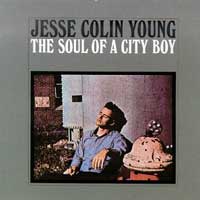 Noch so eine Wühltischentdeckung! Ende der 60er hatte er die Youngbloods
gegründet und in den 70ern gab's noch mehrere schöne Soloalben.
Aber dieses Debüt ist tatsächlich bereits von 1964!
Noch so eine Wühltischentdeckung! Ende der 60er hatte er die Youngbloods
gegründet und in den 70ern gab's noch mehrere schöne Soloalben.
Aber dieses Debüt ist tatsächlich bereits von 1964!
Wie leichtgläubig man doch oft ist! beim Hören der Platte
fällt mir auf, dass da nirgendwo John Sebastian mit seiner
Mundharmonika zu hören ist, wie aber in einer der angeführten
Besprechungen behauptet wird! Die Erklärung ist im Übrigen
recht einfach: der gute Mann hatte "Soul Of A City Boy" mit
"Young Blood", dem Nachfolger- Album von 1965 verwechselt.
Ansonsten bleibt weiterhin festzuhalten: schöner Folk-Blues, der
aus heutiger Sicht zwar ein klein wenig antiquiert klingt, aber trotzdem
in der Liga von Bob Dylan angesiedelt werden darf.
(08.03.2006)
Mehr ...
|
Twenty-two-year-old Perry Miller was spotted by pianist/composer Bobby
Scott at Folk City in Greenwich Village and signed to Capitol Records
under the auspices of Scott's employer, Bobby Darin. Scott took Miller,
now renamed Jesse Colin Young, into New York's A&R Studios in the
spring of 1964, and they emerged four hours later with this 31-minute,
11-track acoustic-guitar-and-vocal debut album. Young proved to be an
adept guitarist conversant with all the basic fingerpicking folk patterns,
and to have an expressive, elastic tenor voice with just a touch of graininess
to keep him from sounding too smooth. His six originals were fine but
unexceptional, and his covers of songs like "Rye Whiskey" were
pleasant. In the folk boom of the early '60s, The Soul of a City Boy was
just one more entry in the dominant style, and it would not be remembered
today if Young had not gone on to bigger and better things. But it demonstrates
that in his early 20s, he had a good grasp of the playing, singing, and
writing talents upon which he would build in later years. The album did
not sell upon release, but when it was reissued for the second time in
January 1974 in the wake of the success of Young's Song for Juli album,
it made the charts for several weeks.
(by William Ruhlmann, All
Music Guide)
|
|
|
"Jesse Colin Young was one of the most original singer songwriters
of the early 60s. His first record, The Soul Of A City Boy (Capitol, 1964)
is infinitely more modern and creative than Dylan's early work, not to
mention all the others. At his side were a young John Sebastian on harmonica,
and a rhythm section of jazz men. Lullaby, Little Suzie and Green Hill
Mountain Home are songs that transcend folk, blues, country and jazz.
The only problem is it would remain his unsurpassed masterpiece."
(Quelle ???)
|
|
| Bob Dylan: "The Times They Are A-Changin'" (Columbia, Juni 1964) |
|
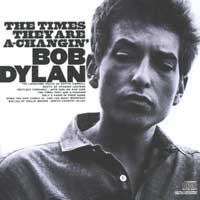 "The
Times They Are A-Changin' ist eine der düstersten Platten, die
Dylan gemacht hat. Als 22-jähriger klingt er schon genauso pessimistisch
wie der kränkelnde 55-jährige, der "Time
out of Mind" aufgenommen hat. Auf der LP finden sich auch stürmische
Protestlieder wie der Titel-Track und "When the Ship Comes In",
aber diese werden von den genauso kraftvollen, vor Pessimismus triefenden
Stücken wie "Only a Pawn in Their Game", "The Lonesome
Death of Hattie Carroll" und "The Ballad of Hollis Brown"
zahlenmäßig weit übertroffen. Es scheint, als ob Bob
Dylan erst einmal sein grimmigstes Material abliefern wollte, bevor
er mit "Another Side of Bob Dylan"
auf die Seite der Befreiung und des Lachens wechselte." (Rickey
Wright, Amazon) "The
Times They Are A-Changin' ist eine der düstersten Platten, die
Dylan gemacht hat. Als 22-jähriger klingt er schon genauso pessimistisch
wie der kränkelnde 55-jährige, der "Time
out of Mind" aufgenommen hat. Auf der LP finden sich auch stürmische
Protestlieder wie der Titel-Track und "When the Ship Comes In",
aber diese werden von den genauso kraftvollen, vor Pessimismus triefenden
Stücken wie "Only a Pawn in Their Game", "The Lonesome
Death of Hattie Carroll" und "The Ballad of Hollis Brown"
zahlenmäßig weit übertroffen. Es scheint, als ob Bob
Dylan erst einmal sein grimmigstes Material abliefern wollte, bevor
er mit "Another Side of Bob Dylan"
auf die Seite der Befreiung und des Lachens wechselte." (Rickey
Wright, Amazon)
|
| Lee Morgan: "The Sidewinder" (Blue Note, Juli 1964) |
 [Joe Henderson]
Mehr ...
Der in Philadelphia geborene Trompeter und hervorragende Bebop-Stilist Lee Morgan sammelte seine ersten Erfahrungen bei Dizzy Gillespie und Art Blakey, bevor er sich in den frühen 60ern als Leader mit eigenen Aufnahmen bei Blue Note hervortat. Obwohl musikalisch Gillespie und Clifford Brown verpflichtet, entwickelte er doch bald seine persönliche Stimme, die Halb-Ventil-Effekte ebenso beinhaltete wie Latin-Einflüsse und volltönende fließende Melodien.
Während viele von Morgans späteren Blue Note Sessions zusammen mit dem Saxophonisten Hank Mobley entstanden, stellt The Sidewinder den noch jungen Tenoristen Joe Henderson an der Seite des Detroiter Pianisten Barry Harris, des Bassisten Bob Cranshaw und des Schlagzeugers Billy Higgins in den Vordergrund. Neben dem Titelstück, einem konventionellen 24-taktigen Blues, ist "Totem Pole" der kompositorische Mittelpunkt, ein Latin-Moll-Groove mit einen herausragenden Solo von Joe Henderson. Das ist die Art entspannter, durch geistreiche Darbietungen belebter Studiotermine, die das Rückgrat des Blue Note-Katalogs ausmachen.
(Fred Goodman, Amazon.de)
In the age of the long-haired rock groups, a jazz hit single was a rarity. In early 1965, however, Lee Morgan’s ‘The Sidewinder’, a catchy soul jazz tune riding a jaunty, danceable groove, broke into the US Hot 100, peaking at No.81. The parent album, released the previous year, when Morgan was 25, did even better, reaching No.25 on the US albums chart and becoming the biggest-selling LP in Blue Note’s history. Though dominated by its highly infectious title song, The Sidewinder is not a one-track wonder. Morgan, together with tenor saxophonist Joe Henderson, pianist Barry Harris, bassist Bob Cranshaw and drummer Billy Higgins, serves up some serious hard bop blowing. Notable for its absence of ballads, The Sidewinder offers a selection of Morgan-penned uptempo numbers, including the super-lively ‘Hocus Pocus’ and slightly mellower ‘Totem Pole’, which are characterised by strong solos and taut group interplay.
(www.udiscovermusic.com)
The Sidewinder was trumpeter Lee Morgan’s – and for a time, Blue Note’s – greatest commercial triumph. As a single, the infectious title track with its jaunty, danceable groove, made Billboard’s Hot 100, helping the parent album to ascend to No. 10 in the US R&B albums chart. The rest of the album was more exploratory, ranging from Latin-inflected pieces (“Totem Pole”) to advanced hard bop (“Gary’s Notebook” and “Hocus-Pocus”). Morgan’s collaborators included Joe Henderson and pianist Barry Harris. Even today, The Sidewinder continues to be one of the top-selling albums in Blue Note’s catalogue.
(www.udiscovermusic.com)
|
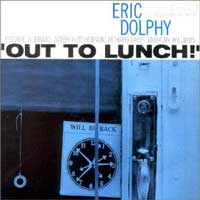
| Eric Dolphy: "Out To Lunch" (Blue Note, Aug. 1964) |
 [Freddie Hubbard |
Bobby Hutcherson]
[Freddie Hubbard |
Bobby Hutcherson]
Mehr ...
Was die Kunst der musikalischen Improvisation betrifft, so gehörte Eric Dolphy zu den Mutigsten, leidenschaftlichsten und spieltechnisch Besten, die in den 60er Jahren zu musikalischer Reife gelangten. Angefangen mit seinem Durchbruch zusammen mit Chico Hamilton und Charles Mingus, über die richtungsweisende Zeit seiner Zusammenarbeit mit John Coltrane, bis hin zu seinen brillanten Soloaufnahmen für das Prestige-Label faßte dieser innovative Blättchenbläser das Beste aus den Traditionen des Swing und Bebop zusammen -- von Benny Carter bis hin zu Bird. Monks Freiheitsbegriff hinsichtlich Rhythmus, Melodie und Harmonien legte er dabei noch großzügiger aus. Dolphy, dieser Hexenmeister der Gefühle, besaß einen ausgeprägten Hang zur Komik. Erkennbar wird er im rhythmischen, trunkenen Schaukeln des Themas bei "Straight Up and Down". Monks Einfluß wird in Dolphys cleveren Dissonanzen und betont gespielten Blues-Sätzen bei "Out to Lunch" deutlich (seiner einzigen Aufnahme unter dem Blue-Note-Label, vollendet kurz vor seinem viel zu frühen Tod). Richard Davis, Bobby Hutcherson und Tony Williams sind Meister des Rhythmus. Als solche halten sie die Zeit nach Belieben an, machen sich den so entstehenden Raum zu eigen, demontieren Harmonien durch das Aufsetzen kubistischer Rhythmusverschiebungen. Sie versammeln sich um Freddie Hubbards brummelnde Trompete und um Dolphys melodietragende Bassklarinette (so in dem im Stile Monks gehaltenen "Hat and Beard"), um seine wimmernde Altklarinette (in den kampflustigen Parodien auf den Titelsong) und um seine lebendige Querflöte (im lyrischen, swingenden "Gazzelloni"). Out to Lunch ist die am weitesten gehende Umsetzung der Dolphyschen Visionen.
(Chip Stern, Amazon)
Out to Lunch stands as Eric Dolphy's magnum opus, an absolute pinnacle of avant-garde jazz in any form or era. Its rhythmic complexity was perhaps unrivaled since Dave Brubeck's Time Out, and its five Dolphy originals -- the jarring Monk tribute "Hat and Beard," the aptly titled "Something Sweet, Something Tender," the weirdly jaunty flute showcase "Gazzelloni," the militaristic title track, the drunken lurch of "Straight Up and Down" -- were a perfect balance of structured frameworks, carefully calibrated timbres, and generous individual freedom. Much has been written about Dolphy's odd time signatures, wide-interval leaps, and flirtations with atonality. And those preoccupations reach their peak on Out to Lunch, which is less rooted in bop tradition than anything Dolphy had ever done. But that sort of analytical description simply doesn't do justice to the utterly alien effect of the album's jagged soundscapes. Dolphy uses those pet devices for their evocative power and unnerving hints of dementia, not some abstract intellectual exercise. His solos and themes aren't just angular and dissonant -- they're hugely so, with a definite playfulness that becomes more apparent with every listen. The whole ensemble -- trumpeter Freddie Hubbard, vibist Bobby Hutcherson, bassist Richard Davis, and drummer Tony Williams -- takes full advantage of the freedom Dolphy offers, but special mention has to be made of Hutcherson, who has fully perfected his pianoless accompaniment technique. His creepy, floating chords and quick stabs of dissonance anchor the album's texture, and he punctuates the soloists' lines at the least
expected times, suggesting completely different pulses. Meanwhile, Dolphy's stuttering vocal-like effects and oddly placed pauses often make his bass clarinet lines sound like they're tripping over themselves. Just as the title Out to Lunch suggests, this is music that sounds like nothing so much as a mad gleam in its creator's eyes.
(by Steve Huey, All Music Guide)
Eric Dolphy was a true original with his own distinctive styles on alto, flute, and bass clarinet. His music fell into the "avant-garde" category yet he did not discard chordal improvisation altogether (although the relationship of his notes to the chords was often pretty abstract). While most of the other "free jazz" players sounded very serious in their playing, Dolphy's solos often came across as ecstatic and exuberant. His improvisations utilized very wide intervals, a variety of nonmusical speechlike sounds, and its own logic. Although the alto was his main axe, Dolphy was the first flutist to move beyond bop (influencing James Newton) and he largely introduced the bass clarinet to jazz as a solo instrument. He was also one of the first (after Coleman Hawkins) to record unaccompanied horn solos, preceding Anthony Braxton by five years.
Eric Dolphy first recorded while with Roy Porter & His Orchestra (1948-1950) in Los Angeles, he was in the Army for two years, and he then played in obscurity in L.A. until he joined the Chico Hamilton Quintet in 1958. In 1959 he settled in New York and was soon a member of the Charles Mingus Quartet. By 1960 Dolphy was recording regularly as a leader for Prestige and gaining attention for his work with Mingus, but throughout his short career he had difficulty gaining steady work due to his very advanced style. Dolphy recorded quite a bit during 1960-1961, including three albums cut at the Five Spot while with trumpeter Booker Little, Free Jazz with Ornette Coleman, sessions with Max Roach, and some European dates.
Late in 1961 Dolphy was part of the John Coltrane Quintet; their engagement at the Village Vanguard caused conservative critics to try to smear them as playing "anti-jazz" due to the lengthy and very free solos. During 1962-1963 Dolphy played third stream music with Gunther Schuller and Orchestra U.S.A., and gigged all too rarely with his own group. In 1964 he recorded his classic Out to Lunch for Blue Note and traveled to Europe with the Charles Mingus Sextet (which was arguably the bassist's most exciting band, as shown on The Great Concert of Charles Mingus). After he chose to stay in Europe, Dolphy had a few gigs but then died suddenly from a diabetic coma at the age of 36, a major loss.
Virtually all of Eric Dolphy's recordings are in print, including a nine-CD box set of all of his Prestige sessions. In addition, Dolphy can be seen on film with John Coltrane (included on The Coltrane Legacy) and with Mingus from 1964 on a video released by Shanachie.
(by Scott Yanow, All Music Guide)
Out To Lunch! boasts one of Blue Note’s most iconic Reid Miles-designed covers, perfectly mirroring the exploratory nature of Dolphy’s groundbreaking music. A rising star of jazz’s avant-garde scene who could play alto sax, flute and clarinet, LA-born Dolphy recorded this, his only session as a leader for Blue Note, in February 1964, but died before it was released. The album highlights not only Dolphy’s ability as an instrumentalist but his talent as a composer. He’s accompanied by an exciting young band that includes trumpeter Freddie Hubbard, vibraphonist Bobby Hutcherson – whose shimmering chords give the music a dreamy feel – and drummer Tony Williams, then just 18. ‘Hat And Beard’, propelled by Richard Davis’ walking bassline, is a quirky tribute to Thelonious Monk that sets the tone for an album that moves beyond the constraints of bebop and into the realm of unfettered free jazz, yet remains tightly focused. Though he recorded for several other labels, this solitary Blue Note offering remains the go-to album in Dolphy’s canon and is one of the undoubted jewels in the label’s crown. Every guide to Blue Note should include it.
(www.udiscovermusic.com)
A gifted multi-reed exponent and flutist, the LA-born Eric Dolphy only made one album for Blue Note, but it helped to bring him immortality, even though it was released a few months after his untimely death in June 1964. Considered a leading light of the avant-garde scene, Dolphy created a genuine masterpiece with the innovative Out To Lunch! , featuring the combined talents of Freddie Hubbard, Bobby Hutcherson, bassist Richard Davis, and drummer Tony Williams. Dolphy alternates between bass clarinet, flute, and alto saxophone on five self-written tunes that range from the avant-bebop swing of “Hat and Beard” and “Gazzelloni” to more discursive pieces like the title track and comedic “Straight Up & Down.” Out To Lunch! is a touchstone in avant-garde jazz.
(www.udiscovermusic.com)
|
| Bob Dylan: "Another Side Of Bob Dylan" (Columbia, Sept. 1964) |
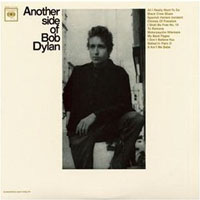 Mit
dem dritten Album gab es eine Abkehr von den mehr politischen Songs, zurück
zu privaten Themen. "Chimes Of Freedom", "My Back Pages"
"It Ain't Me, Babe". Hat damals nicht jedem in den Kram gepasst. Mit
dem dritten Album gab es eine Abkehr von den mehr politischen Songs, zurück
zu privaten Themen. "Chimes Of Freedom", "My Back Pages"
"It Ain't Me, Babe". Hat damals nicht jedem in den Kram gepasst. |
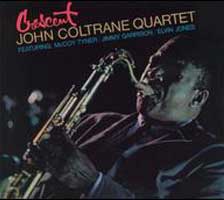
| John Coltrane Quartet: "Crescent" (Impulse!, Okt. 1964) |
 [A Love Supreme |
McCoy Tyner]
[A Love Supreme |
McCoy Tyner]
Mehr ...
Crescent was Coltrane’s ninth album for Impulse!, the jazz division of ABC/Paramount that he quit Atlantic for, in 1961. Featuring his so-called classic quartet (Tyner, Garrison, Jones), it contained all original compositions and proved to be a very spiritual LP epitomised by the haunting ‘Wise One’, which opens with lush, rhapsodic chords from Tyner, who sets the mellow tone for Coltrane’s tenor sax, which enunciates a beautiful melody. The second side of the album was also remarkable for containing two tunes (‘Lonnie’s Lament’ and ‘The Drum Thing’) on which Coltrane doesn’t take a solo. Stylistically, it’s a perfect starter to prepare the listener for the following year’s A Love Supreme.
(www.udiscovermusic.com)
One of only two studio albums cut by the John Coltrane Quartet during 1964, Crescent is most notable for including five Coltrane compositions including the title cut, "Lonnie's Lament" and the swinging "Bessie's Blues." The music is excellent although not as fiery as the Quartet's live performances of the period.
(by Scott Yanow, All Music Guide)
|
| Stan Getz: "Getz Au Go Go" (Verve, Okt. 1964) |
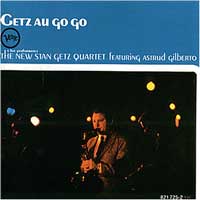 Ein
Highlight der Bossa Nova/Jazz-Fusion. Mit den Tom Jobim-Songs "One
Note Samba" und "Corcovado" und vielen anderen Jazz-Klassikern.
Als Gaststar ist die Sängerin Astrud Gilberto dabei
(Getz und Gilberto hatten es im Jahr zuvor geschafft,
als Jazzer mit dem "Girl from Ipanema" in die Charts zu kommen),
am Vibraphon ein junger Mann zu Beginn seiner Weltkarriere dabei: Gary Burton. Ein
Highlight der Bossa Nova/Jazz-Fusion. Mit den Tom Jobim-Songs "One
Note Samba" und "Corcovado" und vielen anderen Jazz-Klassikern.
Als Gaststar ist die Sängerin Astrud Gilberto dabei
(Getz und Gilberto hatten es im Jahr zuvor geschafft,
als Jazzer mit dem "Girl from Ipanema" in die Charts zu kommen),
am Vibraphon ein junger Mann zu Beginn seiner Weltkarriere dabei: Gary Burton.
|
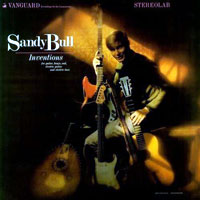
| Sandy Bull: "Inventions" (Vanguard, 1964 ) |
 [Lost & Found!!]
Mehr ...
Considered to be his finest moment, Bull's second record goes beyond his first, wearing an electric halo while he continues to explore the boundaries of the guitar. "Blend 2", his answer to his first record's opus "Blend", is a must have for all of those who love John Fahey and Six Organs Of Admittance. A ghostly, warm record as a whole: Bull is on top of his game and once again reinventing the way the ear hears the hand as it plays the guitar. Original artwork.
|
| John Coltrane: "Black Pearls" (Prestige, 1964) |
 Aufgenommen
mit dem Red Garland Trio (Garland am Piano, dazu Drummer Art
Taylor und Bassist Paul Chambers), verstärkt durch Trompeter
Donald Byrd, bereits am 23.05.1958. Nach meiner Vermutung
auf Basis der Bestellnummer (PR 7316) aber erst 1964 veröffentlicht, als
Coltrane bereits ein "Star" war. Eine der unzähligen Sessions,
die Coltrane damals für das Prestige-Label machte. Der Vorwurf an Künstler,
bzw. eher: an das Label, lautet natürlich schnell: "Abfallprodukt"
oder sogar: "Trittbrettfahrer". Natürlich ist das hier nicht
so innovativ, was Coltrane zeitgleich auf dem Impulse-Label produzierte
und veröffentlichte Aufnahmen (z.B. "Crescent"
vom Juni '64 oder das im Dezember folgende Meisterwerk "A
Love Supreme"), aber doch von allerhöchster Güte. Ich kenne inzwischen
so einige der Coltrane Prestige-Veröffentlichungen, aber diese hier scheint
mir doch besonders gelungen. Oder besser gesagt: besonders schön zu geniessen. Aufgenommen
mit dem Red Garland Trio (Garland am Piano, dazu Drummer Art
Taylor und Bassist Paul Chambers), verstärkt durch Trompeter
Donald Byrd, bereits am 23.05.1958. Nach meiner Vermutung
auf Basis der Bestellnummer (PR 7316) aber erst 1964 veröffentlicht, als
Coltrane bereits ein "Star" war. Eine der unzähligen Sessions,
die Coltrane damals für das Prestige-Label machte. Der Vorwurf an Künstler,
bzw. eher: an das Label, lautet natürlich schnell: "Abfallprodukt"
oder sogar: "Trittbrettfahrer". Natürlich ist das hier nicht
so innovativ, was Coltrane zeitgleich auf dem Impulse-Label produzierte
und veröffentlichte Aufnahmen (z.B. "Crescent"
vom Juni '64 oder das im Dezember folgende Meisterwerk "A
Love Supreme"), aber doch von allerhöchster Güte. Ich kenne inzwischen
so einige der Coltrane Prestige-Veröffentlichungen, aber diese hier scheint
mir doch besonders gelungen. Oder besser gesagt: besonders schön zu geniessen.
Und wenn man denn doch unbedingt noch etwas zum Meckern sucht: das Coverfoto
ist natürlich spiegelverkehrt! Ein immer wieder bei Billig-Trittbrettfahrern
zu findender Fehler. Da darf wohl immer irgendein unbedarfter Praktikant
oder uninteressierter Mitarbeiter das Foto auswählen und das Cover gestalten
...
(10.05.2009) |
| Grant Green: "Idle Moments" (Blue Note, 1964) |
 [Joe Henderson |
Bobby Hutcherson]
[Joe Henderson |
Bobby Hutcherson]
Mehr ...
This languid, seductive gem may well be Grant Green's greatest moment on record. Right from the opening bars of the classic title cut, Idle Moments is immediately ingratiating and accessible, featuring some of Green's most stylish straight jazz playing. Whether he's running warm (pianist Duke Pearson's "Idle Moments"), cool (the Modern Jazz Quartet's "Django"), or a bit more up-tempo (Pearson's "Nomad," his own "Jean de Fleur"), Green treats the material with the graceful elegance that was the hallmark of his best hard bop sessions, and that quality achieves its fullest expression here. He's helped by an ensemble that, as a sextet, is slightly larger and fuller-sounding than usual, and there's plenty of room for solo explorations on the four extended pieces. Pearson's touch on the piano is typically warm, while two players best known on Blue Note for their modernist dates mellow out a bit -- the cool shimmer of Bobby Hutcherson's vibes is a marvelously effective addition to the atmosphere, while Joe Henderson plays with a husky, almost Ike Quebec-like breathiness. That cushion of support helps spur Green to some of the loveliest, most intimate performances of his career -- no matter what the tempo, it's as if his guitar is whispering secrets in your ear. It's especially true on the dreamy title track, though: a gorgeous, caressing, near-15-minute excursion that drifts softly along like a warm, starry summer night. Even more than the two-disc set The Complete Quartets With Sonny Clark, Idle Moments is the essential first Green purchase, and some of the finest guitar jazz of the hard bop era.
(by Steve Huey, All Music Guide)
Many of Green’s Blue Note sessions featured him in small combos that gave ample space to showcase his guitar skills. But this album, arguably the St. Louis fretboard maestro’s magnum opus, featured him in a sextet setting using more complex arrangements and denser textures. Though his co-stars included Joe Henderson, Duke Pearson, and Bobby Hutcherson, they didn’t eclipse him, allowing Green to shine as both a soloist and an ensemble player. The album’s four tracks range from zippy swingers (“Jean De Fleur”) to pensive ballads (Duke Pearson’s epic title song).
(www.udiscovermusic.com)
|
| Judy Henske: "High Flying
Bird" (Elektra, 1964) |
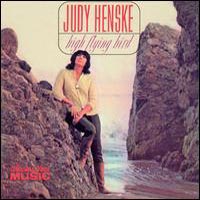 Ihr zweites und letztes Album für Elektra kann man durchaus als einen
Folkrock-Klassiker bzw. eine Folkrock-Pioniertat bezeichnen. Aber eigentlich
trifft es folgendes besser: Judy Henske ist die Kombination aus
Patsy Cline und Billie Holiday, deren "God Bless The
Child" sie ganz wunderbar singt. Weder sah sie wie Folk-Queen Joan
Baez aus, noch klang sie so. Ihr inoffizieller Titel war - glaube
ich - "Queen Of Beatnik".
Ihr zweites und letztes Album für Elektra kann man durchaus als einen
Folkrock-Klassiker bzw. eine Folkrock-Pioniertat bezeichnen. Aber eigentlich
trifft es folgendes besser: Judy Henske ist die Kombination aus
Patsy Cline und Billie Holiday, deren "God Bless The
Child" sie ganz wunderbar singt. Weder sah sie wie Folk-Queen Joan
Baez aus, noch klang sie so. Ihr inoffizieller Titel war - glaube
ich - "Queen Of Beatnik".
Der Titelsong aus der Feder von Billy Ed Wheeler wurde später auch
von Jefferson Airplane aufgenommen.
Es gibt auch ein paar gute eigene Lieder, z. B. "Oh, You Engineer",
das sie zusammen mit dem damaligen Playboy-Cartoonisten und späteren Dr.
Hook-Hitlieferanten Shel Silverstein
schrieb, der auch für die geistreichen Linernotes verantwortlich ist.
Ende der 60er machte sie mit ihrem damaligen Ehemann Jerry Yester
auf Zappas Straight-Label noch eine Kultplatte ("Farewell
Aldebaran"), heiratete in den 70ern den Keyboarder Craig Doerge
und hat gerade, im zarten Alter von 72 Jahren!, eine neue CD herausgebracht.
Tolle Lady!
(03.05.2009)
Mehr ...
Henske sings with a full-throated, bluesy style reminiscent of Mama Cass on her best album, which was one of the first contemporary folk records to use a rhythm section (including Earl Palmer on drums). Highlighted by the title track, a moody, soaring ballad that was covered by Jefferson Airplane.
(by Richie Unterberger, All Music Guide)
|
| Jusef Lateef: "Eastern Sounds" (Prestige, 1964) |
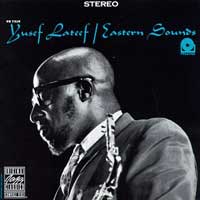 "Eastern Sounds" ist anscheinend genauso wie Coltranes "Black
Pearls" ein Prestige-Veröffentlichung mit gewisser "Verzögerung":
bereits am 5. September 1961 im Quartett mit Barry Harris (piano),
Ernie Farrow (Bass und die/das indische "Rabat") und
Lex Humphries (drums) eingespielt, ist Album wohl erst ca. 1964
herausgekommen, als Lateef bereits bei Impulse unter Vertrag war! Ganz
lässig und ohne großes Brimborium bringt der Multiinstrumentalist Jusef
Lateef (der schon in den 50ern zum Islam kovertierte) tatsächlich einen völlig
ernsthaften Oboenblues!) Ost und West musikalisch zusammen. Und das noch
viel früher als sein Kollege John Coltrane. Klasse Platte.
"Eastern Sounds" ist anscheinend genauso wie Coltranes "Black
Pearls" ein Prestige-Veröffentlichung mit gewisser "Verzögerung":
bereits am 5. September 1961 im Quartett mit Barry Harris (piano),
Ernie Farrow (Bass und die/das indische "Rabat") und
Lex Humphries (drums) eingespielt, ist Album wohl erst ca. 1964
herausgekommen, als Lateef bereits bei Impulse unter Vertrag war! Ganz
lässig und ohne großes Brimborium bringt der Multiinstrumentalist Jusef
Lateef (der schon in den 50ern zum Islam kovertierte) tatsächlich einen völlig
ernsthaften Oboenblues!) Ost und West musikalisch zusammen. Und das noch
viel früher als sein Kollege John Coltrane. Klasse Platte.
(10.05.2009)
Mehr ...
One of multi-instrumentalist and composer Yusef Lateef's most enduring recordings, Eastern Sounds was one of the last recordings made by the band that Lateef shared with pianist Barry Harris after the band moved to New York from Detroit, where the jazz scene was already dying. Lateef had long been interested in Eastern music, long before John Coltrane had ever shown any public interest anyway, so this Moodsville session (which meant it was supposed to be a laid-back ballad-like record), recorded in 1961, was drenched in Lateef's current explorations of Eastern mode and interval, as well as tonal and polytonal improvisation. That he could do so within a context that was accessible, and even "pretty," is an accomplishment that stands today. The quartet was rounded out by the inimitable Lex Humphries on drums — whose brushwork was among the most deft and inventive of any player in the music with the possible exception of Connie Kay from the Modern Jazz Quartet — and bass and rabat player Ernie Farrow. The set kicks off with "The Plum Blossom," a sweet oboe and flute piece that comes from an Eastern scale and works in repetitive rhythms and a single D minor mode to move through a blues progression and into something a bit more exotic, which sets up the oboe-driven "Blues for the Orient." Never has Barry Harris' playing stood up with more restraint to such striking effect than it does here. He moves the piece along with striking ostinatos and arpeggios that hold the center of the tune rather than stretch it. Lateef moans softly on the oboe as the rhythm section doubles, then triples, then half times the beat until it all feels like a drone. There are two cinematic themes here — he cut themes from the films Spartacus and The Robe, which are strikingly, hauntingly beautiful — revealing just how important accessibility was to Lateef. And not in the sense of selling out, but more in terms of bringing people to this music he was not only playing, but discovering as well. (Listen to Les Baxter and to the early-'60s recordings of Lateef — which ones are more musically enduring?) However, the themes set up the deep blues and wondrous ballad extrapolations Lateef was working on, like "Don't Blame Me" and "Purple Flower," which add such depth and dimension to the Eastern-flavored music that it is hard to imagine them coming from the same band. Awesome.
(by Thom Jurek, All Music Guide)
|
Jackie McLean: "Destination Out" (Blue Note, 1964) |
 [Gracan Moncur III |
Bobby Hutcherson]
[Gracan Moncur III |
Bobby Hutcherson]
Mehr ...
Like Eric Dolphy before him, Jackie McLean sought to create a kind of vanguard "chamber jazz" that still had the blues feel and — occasionally — the groove of hard bop, though with rounded, moodier edges. Destination Out! was the album on which he found it. Still working with Grachan Moncur III and Bobby Hutcherson — his direct spiritual connection to Dolphy — McLean changed his rhythm section by employing drummer Roy Haynes and bassist Larry Ridley. This combination proved a perfect balance of the four elements. The program is four tunes, three of which were written by Moncur. If there was a perfect Blue Note session after John Coltrane's Blue Train, this was it. Opening with a ballad was a novel idea in 1966, but McLean uses Moncur's love and hate to reveal all the tonal possibilities within this group of musicians, and the textural interplay that exists in the heightened sense of form, time breaks, and rhythm changes. As begun on One Step Beyond, the notion of interval is key in this band, and an elemental part of Moncur's composition. The horn lines are spare, haunting, warm, and treated as textural elements by Hutcherson's vibes. On the tune "Esoteric," Hutcherson and Haynes throw complex rhythmic figures into the mix. Moncur's writing is angular, resembling Ornette's early-'60s melodic notions more than Coltrane's modal considerations. Hutcherson's solo amid the complex, knotty melodic frame is just sublime. "Khalil the Prophet" is McLean's only contribution compositionally to the album, but it's a fine one. Using a hard bop lyric and a shape-shifting sense of harmonic interplay between the three front-line players, McLean moves deeply into a blues groove without giving into mere 4/4 time structures. The architecture of his solo is wonderfully obtuse, playing an alternating series of eighths, 12ths, and even 16ths against Hutcherson's wide-open comping and arpeggio runs. The set ends with Moncur's "Riff Raff," a strolling blues that makes full use of counterpoint on the vibes. Moncur sets his solo against McLean's melodic engagement of Hutcherson, forcing both men into opposition positions that get resolved in a sultry, funky, shimmering blues groove. Of all of McLean's Blue Note dates, so many of which are classic jazz recordings, Destination Out! stands as the one that reveals the true soulfulness and complexity of his writing, arranging, and "singing" voice.
(by Thom Jurek, All Music Guide)
|
| Ike Quebec: "It Might A Well Be Spring" (Blue Note, 1964) |

|
| Horace Silver Quintet: "Song For My Father" (Blue Note, 1964) |
Mehr ...
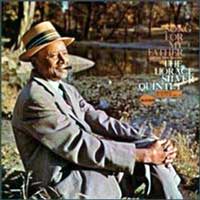
Da der Titeltrack Steely Dan zu dem Song "Rikki, Don't Lose That Number" inspirierte, wurde Song For My Father bekannt als Jazzaufnahme, die tausend schlechte Pop-Platten nach sich zog. Aber ganz gleich welche Absichten Steely Dan und ihre vielen, vielen verzweifelten Imitatoren hatten, wir sollten die Schuld hieran nicht dem Pianisten Horace Silver in die Schuhe schieben: Dies ist eine der gefühlvollsten und erfreulichsten Sammlungen von Blue Note -- und das heißt schon etwas. Horace Silver war ein Pionier des Hard-Bop-Stils, der Gospel und R&B mit Jazz kombinierte, er war der Autor von vielen hervorragenden Kompositionen, zu denen nicht nur "Song For My Father" gehört, sondern auch "Opus De Funk", "Nica's Dream", "Senor Blues" und "The Preacher". Seine Quintette, die Tenorsaxofon und Trompete präsentieren, brachten solche Talente hervor wie die Trompeter Woody Shaw, Art Farmer und Donald Byrd. Auf Song For My Father kommt der Tenorsaxofonist Joe Henderson hinzu, der eine seiner typischen Melodien, "The Kicker", beisteuert. Neben der anspruchsvollen Arbeit mit dem Quintett bietet dieses Album auch ein schönes Porträt des Pianisten mit seinem Trio bei "Lonely Woman".
(Fred Goodman, Amazon)
One of Blue Note's greatest mainstream hard bop dates, Song for My Father is Horace Silver's signature LP and the peak of a discography already studded with classics. Silver was always a master at balancing jumping rhythms with complex harmonies for a unique blend of earthiness and sophistication, and Song for My Father has perhaps the most sophisticated air of all his albums. Part of the reason is the faintly exotic tint that comes from Silver's flowering fascination with rhythms and modes from overseas -- the bossa nova beat of the classic "Song for My Father," for example, or the Eastern-flavored theme of "Calcutta Cutie," or the tropical-sounding rhythms of "Que Pasa?" Subtle touches like these alter Silver's core sound just enough to bring out its hidden class, which is why the album has become such a favorite source of upscale ambience. Song for My Father was actually far less focused in its origins than the typical Silver project; it dates from the period when Silver was disbanding his classic quintet and assembling a new group, and it features performances from both bands (and, on the CD reissue with bonus tracks, three different sessions). Still, it hangs together remarkably well, and Silver's writing is at its tightest and catchiest. The title cut became Silver's best-known composition, partly because it provided the musical basis for jazz-rock group Steely Dan's biggest pop hit "Rikki Don't Lose That Number." Another hard bop standard is introduced here in the lone non-Silver tune, tenor saxophonist Joe Henderson's "The Kicker," covered often for the challenge of its stuttering phrases and intricate rhythms. Yet somehow it comes off as warm and inviting as the rest of the album, which is necessary for all jazz collections -- mainstream hard bop rarely comes as good as Song for My Father.
(by Steve Huey, AMG)
A Blue Note stalwart for many years – he joined the label in 1952 and stayed until 1979 – Horace Silver was a pianist who helped to establish not only the hard bop aesthetic but also the genre’s classic small-group format with its twin horn line-up. Silver and his quintet recorded many fine LPs for Blue Note, but Song For My Father, released in early 1965, is one of his finest for the label, even though it features two different incarnations of the pianist’s band. The “classic” line-up – featuring saxophonist Junior Cook and trumpeter Blue Mitchell – appears on just one cut, while their replacements (Joe Henderson and Carmel Jones, respectively) are present on four others (the closing track, ‘Lonely Woman’, is a trio recording between Silver, bassist Gene Taylor and drummer Roy Brooks). Henderson, in fact, brings an earthy robustness to the proceedings with his solo on the album’s classic title track (whose intro was “borrowed” by rock group Steely Dan for their 1974 song ‘Rikki Don’t Lose That Number’).
(www.udiscovermusic.com)
Although he co-founded The Jazz Messengers with Art Blakey, Silver preferred to forge a solo career and spent 28 years recording as a leader for Blue Note. His most famous album was this one, whose cornerstone was the infectious title song defined by a loping bass line, an elegant horn theme, and Joe Henderson’s vigorous tenor sax solo. The 10-track album also featured elegant ballads (“Lonely Woman” and “Calcutta Cutie”), Latin grooves (“Que Pasa”) and swinging hard bop (“The Kicker”). The album remains an enduring monument to Silver’s genius.
(www.udiscovermusic.com)
|