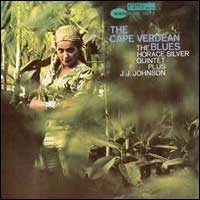
| Horace Silver Quintet plus J.J. Johnson: "The Cap Verdean Blues" (Blue Note, Jan. 1966) |

 Mehr ...
After the success of Song for My Father and its hit title cut, Horace Silver was moved to pay further tribute to his dad, not to mention connect with some of his roots. Silver's father was born in the island nation of Cape Verde (near West Africa) before emigrating to the United States, and that's the inspiration behind The Cape Verdean Blues. Not all of the tracks are directly influenced by the music of Cape Verde (though some do incorporate Silver's taste for light exoticism); however, there's a spirit of adventure that pervades the entire album, a sense of exploration that wouldn't have been quite the same with Silver's quintet of old. On average, the tracks are longer than usual, and the lineup -- featuring tenor saxophonist Joe Henderson (a holdover from the Song for My Father sessions) and trumpeter Woody Shaw -- is one of the most modernist-leaning Silver ever recorded with. They push Silver into more advanced territory than he was normally accustomed to working, with mild dissonances and (especially in Henderson's case) a rawer edge to the playing. What's more, bop trombone legend J.J. Johnson appears on half of the six tracks, and Silver sounds excited to finally work with a collaborator he'd been pursuing for some time. Johnson ably handles some of the album's most challenging material, like the moody, swelling "Bonita" and the complex, up-tempo rhythms of "Nutville." Most interesting, though, is the lilting title track, which conjures the flavor of the islands with a blend of Latin-tinged rhythms and calypso melodies that nonetheless don't sound quite Caribbean in origin. Also noteworthy are "The African Queen," with its blend of emotional power and drifting hints of freedom, and "Pretty Eyes," Silver's first original waltz. Yet another worthwhile Silver album.
(by Steve Huey, All usic Guide)
One of hard bop’s chief architects, Connecticut-born pianist-composer Horace Silver was also a co-founder member of The Jazz Messengers and helped to establish the two-horn frontline (trumpet and saxophone) as the norm in small-group jazz. Silver’s family originated in Cape Verde, a Portuguese-speaking island off north-west Africa, and this, his 13th Blue Note album, paid homage to his ancestral roots. The pianist fronts a quintet featuring rising Philadelphia trumpet star Woody Shaw, and tenor saxophonist Joe Henderson, who are augmented on three tracks by trombonist J.J. Johnson. The music ranges from vibrant uptempo material (the title track and pulsating “Nutville”) to mellow mid-tempo grooves (“Pretty Eyes”). But undoubtedly, the album’s most arresting cut is “The African Queen,” a loping atmospheric piece characterized by an infectious descending horn melody, a mind-blowing Joe Henderson solo and Roger Humphries’ turbulent drum fills.
(www.udiscovermusic.com)
|
| Them: "Them Again" (Decca/Deram, Jan. 1966) |
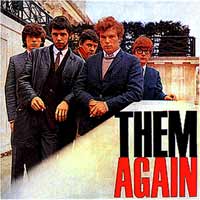 "It's All Over Now baby Blue" von Them ist wahrscheinlich einer
meiner absoluten Lieblinxsonx, auf jeden Fall eine meiner liebsten Dylaninterpretationen.
Beim Van Morrison-Konzert letzten Sonntag in Bonn war das Lied klar einer
der Höhepunkte. Die Platte enthält natürlich noch mehr
Highlights, etwa das Morrison-Original "Could You, Would You"
(später von den Bishops und Willy DeVille gecovert)
oder die Soulstücke "Turn On Your Love Light" und "I
Put A Spell On You". Die Band tourte damals sehr erfolgreich in den
USA als Teil der "British Invasion" und inspirierte viele US,
sich mit ihren eigenen Wurzeln zu beschäftigen. Ich behaupte mal,
dass ohne Van Morrison "Turn On Your Love Light" nie
zu einem Grateful Dead-Klassiker geworden wäre!
"It's All Over Now baby Blue" von Them ist wahrscheinlich einer
meiner absoluten Lieblinxsonx, auf jeden Fall eine meiner liebsten Dylaninterpretationen.
Beim Van Morrison-Konzert letzten Sonntag in Bonn war das Lied klar einer
der Höhepunkte. Die Platte enthält natürlich noch mehr
Highlights, etwa das Morrison-Original "Could You, Would You"
(später von den Bishops und Willy DeVille gecovert)
oder die Soulstücke "Turn On Your Love Light" und "I
Put A Spell On You". Die Band tourte damals sehr erfolgreich in den
USA als Teil der "British Invasion" und inspirierte viele US,
sich mit ihren eigenen Wurzeln zu beschäftigen. Ich behaupte mal,
dass ohne Van Morrison "Turn On Your Love Light" nie
zu einem Grateful Dead-Klassiker geworden wäre!
(16.07.2004)
Mehr ...
|
The group's second and, for all intents and purposes, last full album
was recorded while Them was in a state of imminent collapse. To this day,
nobody knows who played on the album, other than Van Morrison and bassist
Alan Henderson, though it is probable that Jimmy Page was seldom very
far away when Them was recording. The 16 songs here are a little less
focused than the first LP. The material was cut under siege conditions,
with a constantly shifting lineup and a grueling tour schedule; essentially,
there was no "group" to provide focus to the sound, only Morrison's
voice, so the material bounces from a surprisingly restrained "I
Put a Spell on You" to the garage-punkoid "I Can Only Give You
Everything." Folk-rock rears its head not only on the moody cover
of Dylan's "It's All Over Now, Baby Blue" but also the Morrison-authored
"My Lonely Sad Eyes," but the main thrust is soul, which Morrison
oozes everywhere -- while there's some filler, his is a voice that could
easily have knocked Mick Jagger or Eric Burdon off their respective perches.(by
Bruce Eder, AMG)
|
|
| Jefferson Airplane: "Takes Off" (RCA, Feb. 1966) |
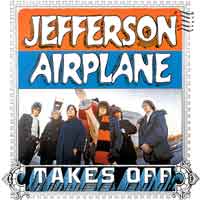 Das
Debüt. Noch ohne Grace Slick: es singt eine gewisse Signe
Anderson. Am Schlagzeug saß erst- und letztmalig der spätere
Moby Grape-Sänger und Gitarrist
Skip Spence. Das
Debüt. Noch ohne Grace Slick: es singt eine gewisse Signe
Anderson. Am Schlagzeug saß erst- und letztmalig der spätere
Moby Grape-Sänger und Gitarrist
Skip Spence. |
| Otis Redding: "The Soul Album" (Stax/Volt, April 1966) |
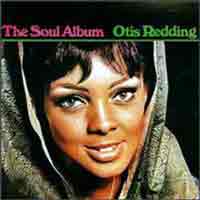 Mit der Stax-Hausband Booker T. & The MGs (Organist Booker T.
Jones, Gitarrist Steve Cropper, Bassist Donald "Duck"
Dunn und Drummer Al Jackson), verstärkt durch Pianist
Isaac Hayes und die Memphis Horns (Trompeter Andrew Love,
Saxofonist Wayne Jackson u.a.) eingespielte vorzügliche Sammlung
an Balladen und gelegntlichen Uptemponummern. Ein Klassiker!
Mit der Stax-Hausband Booker T. & The MGs (Organist Booker T.
Jones, Gitarrist Steve Cropper, Bassist Donald "Duck"
Dunn und Drummer Al Jackson), verstärkt durch Pianist
Isaac Hayes und die Memphis Horns (Trompeter Andrew Love,
Saxofonist Wayne Jackson u.a.) eingespielte vorzügliche Sammlung
an Balladen und gelegntlichen Uptemponummern. Ein Klassiker! |
| The Rolling Stones: "Aftermath" (Decca, April 1966) |
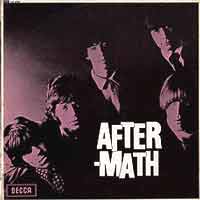 Ich bin nicht wirklich ein Stones-Kenner, würde aber sagen: das erste
gute und eigenständige Stones-Album. Auf jeden Fall ein Klassiker.
Ich bin nicht wirklich ein Stones-Kenner, würde aber sagen: das erste
gute und eigenständige Stones-Album. Auf jeden Fall ein Klassiker.
Mehr ...
| "A breakthrough for the band, completely written by
the Jagger/Richards team and not just better-written but much more complexly
produced than their earlier discs. By now the band was pumping out piles
of hits like the Kinks-style social critique "Mother's Little Helper"
(a Top Ten single); the Elizabeathean-sounding "Lady Jane"; and
the misogynistic, but irresistable Motown-influenced rocker "Under
My Thumb," all of which are included. Plus the band is experimenting
with heavy guitar distortion and new, often bizarre arrangements and instrumentation
(the oddly timed "I Am Waiting"; the endless jam "Goin' Home,"
which fills up most of side 2). The group was still far behind the Beatles
at this point, and there are a few weak stabs at the blues ("Doncha
Bother Me") and even country ("High And Dry"). But the rest
of the record is worth the price of admission, with tons of quality tunes
like "Out Of Time." The American version was cut down and then
augmented by the #1 hit single "Paint It, Black," which featured
some of the first and best Indian instrumentation to appear on a rock record."
(J. Allroy) |
|
| The Blues Project: "Live At The Cafe Au Go Go" (Verve/Folkways, Mai 1966) |
 Bereits ihr Livedebüt wurde für dieses Album mitgeschnitten. Eine der
bekanntesten frühen weissen Bluesband neben Canned Heat, Paul Butterfield
und seinen Mannen. Organist Al Kooper gründete später
Blood, Sweat & Tears, Gitarrist Steve Katz war danach
mit Blood, Sweat & Tears sehr und mit American
Flyer nicht ganz so erfolgreich, Bassist Andy Kulberg und Drummer
Roy Blumenfeld gründeten die Band Sea Train. Eine echte
Keimzelle der Rockgeschichte!
Bereits ihr Livedebüt wurde für dieses Album mitgeschnitten. Eine der
bekanntesten frühen weissen Bluesband neben Canned Heat, Paul Butterfield
und seinen Mannen. Organist Al Kooper gründete später
Blood, Sweat & Tears, Gitarrist Steve Katz war danach
mit Blood, Sweat & Tears sehr und mit American
Flyer nicht ganz so erfolgreich, Bassist Andy Kulberg und Drummer
Roy Blumenfeld gründeten die Band Sea Train. Eine echte
Keimzelle der Rockgeschichte! |
| Bob Dylan: "Blonde On Blonde" (Columbia, Juni 1966) |
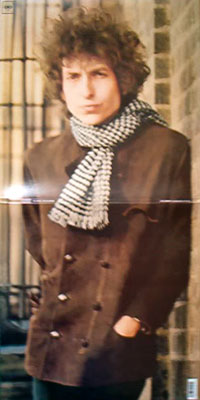 Das erste wichtige Doppelalbum der Rockmusik!
Mehr ...
|
Released on May 16th, 1966, rock's first studio double
LP by a major artist was, as Dylan declared in 1978, "the closest
I ever got to the sound I hear in my head . . . that thin, that wild-mercury
sound." There is no better description of the album's manic brilliance.
After several false-start sessions in New York in the fall of 1965 and
January 1966 with his killer road band the Hawks -- "One of Us Must
Know (Sooner or Later)" was the only keeper -- Dylan blazed through
the rest of Blonde on Blonde's fourteen tracks in two three-day runs at
Columbia's Nashville studios in February and March 1966.
The pace of recording echoed the amphetamine velocity of Dylan's songwriting
and touring schedule at the time. But the combined presence of trusted
hands such as organist Al Kooper and Hawks guitarist Robbie Robertson
with expert local sessionmen including drummer Kenneth Buttrey and pianist
Hargus "Pig" Robbins created an almost contradictory magnificence:
a tightly wound tension around Dylan's quicksilver language and incisive
singing in barrelhouse surrealism such as "Rainy Day Women #12 and
35" and "Stuck Inside of Mobile With the Memphis Blues Again."
Amid the frenzy, Dylan delivered some of his finest, clearest songs of
comfort and desire: the sidelong beauty "Sad Eyed Lady of the Lowlands,"
recorded in just one take, and "I Want You," the title of which
Dylan almost used for the album.
Total album sales: 2 million" (Rolling Stone)
|
|
| The Byrds: "Fifth Dimension" (Columbia, Juli 1966) |
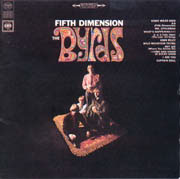 Die Byrds hatten schon im Jahr davor Hits, auf dieser Platte ist aber ihr Klassiker "Eight Miles High"!
Mehr ...
| "The Byrds' third album, 1966's Fifth Dimension, saw
them taking giant steps away from the jangly pop stylings and Dylan covers
of Mr Tambourine Man and on out into the sci-fi stratosphere. In a way,
the straight-ahead songwriting genius of Gene Clark had almost held them
back and his departure just before this album provided a real impetus for
upping the anchor and moving into new territory. Aside from Clark it was
the sound of guitarist Roger McGuinn's dizzyingly complex 12-string that
really defined The Byrds and it's all over Fifth Dimension. Eight Miles
High, originally written by Clark but fleshed out by McGuinn, is still widely
regarded as the first psychedelic rock song and the first raucous take,
from December 1965, predates The Beatles' Tomorrow Never Knows by five months.
In its current incarnation on Sundazed, Fifth Dimension now includes that
first take alongside the slightly tamer 1966 version, but there's not much
in it - either one would still easily qualify as the most creatively ambitious
single ever released. Although it does tend to overshadow the rest of the
album, Fifth Dimension is still a beautifully schizophrenic mix of traditional
folk like Wild Mountain Thyme and John Riley and some truly interstellar
avant-pop." |
|
|
Although Fifth Dimension was wildly uneven, its high points were as innovative
as any rock music being recorded in 1966. Immaculate folk-rock was still
present in their superb arrangements of the traditional songs "Wild
Mountain Thyme" and "John Riley." For the originals, they
devised some of the first and best psychedelic rock, often drawing from
the influence of Indian raga in the guitar arrangements. "Eight Miles
High," with its astral lyrics, pumping bass line, and fractured guitar
solo, was a Top 20 hit, and one of the greatest singles of the '60s. The
minor hit title track and the country-rock-tinged "Mr. Spaceman"
are among their best songs; "I See You" has great 12-string
psychedelic guitar solos; and "I Come and Stand at Every Door"
is an unusual and moving update of a traditional rock tune, with new lyrics
pleading for peace in the nuclear age. At the same time, the R&B instrumental
"Captain Soul" was a throwaway, "Hey Joe" not nearly
as good as the versions by the Leaves or Jimi Hendrix, and "What's
Happening?!?!" the earliest example of David Crosby's disagreeably
vapid hippie ethos. These weak spots keep Fifth Dimension from attaining
truly classic status. (by Richie Unterberger, AMG)
|
|
| Tim Hardin: "1" (Verve, Juli 1966) |
 "1" ist bereits Tims zweites Album, aber das erste auf dem Jazzlabel
Verve mit zahlreichen zukünftigen Klassikern ("Misty
Roses", "Reason To Believe"). Aus der Begleitband ist der
Vibraphonist Gary Burton hervorzuheben.
"1" ist bereits Tims zweites Album, aber das erste auf dem Jazzlabel
Verve mit zahlreichen zukünftigen Klassikern ("Misty
Roses", "Reason To Believe"). Aus der Begleitband ist der
Vibraphonist Gary Burton hervorzuheben.
Mehr ...
|
Tim Hardin's debut album was something of a happy accident, a killer
record at least a third of which was comprised of tracks intended as demos,
while another half utilized a string orchestra that the artist knew nothing
about. Whatever its origins, Tim Hardin 1 is one of the most powerful
and compelling records of its era, encompassing deeply personal and compelling
poetry, blues, rock, and folk in settings ranging from stripped-down Sun
Records-style rock & roll to lightly orchestrated folk-rock. The beautiful,
briskly paced "Don't Make Promises" -- which, along with "Reason
to Believe," became one of the two huge songwriting hits here --
opens the album on an ambitious note, its sound mixing a small-band and
string section behind a confessional lyric. "Green Rocky Road"
and the rollicking "Smugglin' Man" are both more in a traditional
folk-rock vein, showcasing the darker and rougher side of Hardin's singing,
while "How Long" carries listeners into electric blues that
is as raw and stripped down as anything coming out of the British blues
boom of the same era, and which could've passed muster on Chess' Fathers
& Sons blues showcase. Hardin wasn't happy about the presence of the
blues-style demos on the finished album, but when they're placed alongside
such startlingly original and personal songs as "Reason to Believe,"
"Misty Roses," "While You're on Your Way," "It'll
Never Happen Again," and "Hang on to a Dream," they vividly
show off the sheer range of Hardin's singing and his musical sensibilities.
The string accompaniment on most of those songs reportedly wasn't to Hardin's
liking, but Artie Butler's arrangements are models of restraint, and the
bluesier cuts here keep the album from going too far in that direction.
And so what if "Ain't Gonna Do Without" was Hardin's informal
joke based on "Hi Heel Sneakers," never intended for release?
It offered some of the best blues harmonica that John Sebastian ever laid
down on a record. The result is a seminal folk-rock album, every bit as
exciting and urgent as it was in 1966, and as important a creative effort
as Bob Dylan's Bringing It All Back Home and Highway 61 Revisited. And
this wasn't even Hardin's best album, though it set the pattern for everything
he did after.
(by Bruce Eder, All
Music Guide)
|
|
| Lee Morgan: "In Search Of The New Land" (Blue Note, Juli 1966) |
 Und hier ein weiteres Blue-Note-Highlight aus dieser Zeit, aufgenommen aber schon 1964.
Lee Morgan galt damals als eines der größten Talente an der Trompete, bevor er leider
in den Drogensumpf geriet. Auf dieser Platte gibt es Hard-Bob vom Feinsten:
5 Eigenkompositionen von Morgan, unter denen das 15minütige Titelstück
direkt zu Beginn besonders herausragt. Die Band ist so ziemlich das Beste,
was man bei Blue Note damals aufgefahren hat: Wayne Shorter am
Tenorsaxofon, Gitarrist Grant Green, Pianist Herbie
Hancock, Bassist Reggie Worman und Trommler Billy Higgins.
Muss ich außerdem erwähnen, dass Rudy van Gelder wie immer
einen phantastischen Sound hinbekommen hat?
Und hier ein weiteres Blue-Note-Highlight aus dieser Zeit, aufgenommen aber schon 1964.
Lee Morgan galt damals als eines der größten Talente an der Trompete, bevor er leider
in den Drogensumpf geriet. Auf dieser Platte gibt es Hard-Bob vom Feinsten:
5 Eigenkompositionen von Morgan, unter denen das 15minütige Titelstück
direkt zu Beginn besonders herausragt. Die Band ist so ziemlich das Beste,
was man bei Blue Note damals aufgefahren hat: Wayne Shorter am
Tenorsaxofon, Gitarrist Grant Green, Pianist Herbie
Hancock, Bassist Reggie Worman und Trommler Billy Higgins.
Muss ich außerdem erwähnen, dass Rudy van Gelder wie immer
einen phantastischen Sound hinbekommen hat?
(Oktober 2006)
Mehr ...
This set (the CD reissue is a duplicate of the original LP) is one of the finest Lee Morgan records. The great trumpeter contributes five challenging compositions ("Search for the New Land," "The Joker," "Mr. Kenyatta," "Melancholee," and "Morgan the Pirate") that deserve to be revived. Morgan, tenor saxophonist Wayne Shorter, guitarist Grant Green, pianist Herbie Hancock, bassist Reggie Workman, and drummer Billy Higgins are all in particularly creative form on the fresh material, and they stretch the boundaries of hard bop (the modern mainstream jazz of the period). The result is a consistently stimulating set that rewards repeated listenings.
Scott Yanow, All Music Guide)
Signing to Blue Note as a teenage trumpet prodigy in 1956, Morgan had been with the label a decade when the company issued Search For The New Land. It had been recorded two years earlier but was shelved when Morgan hit the US pop charts with the single and album, The Sidewinder. Morgan leads an all-star sextet – including Wayne Shorter, Herbie Hancock, and Grant Green – on five enthralling self-penned compositions, that range from the beautifully meditative title track to the African-tinged hard bop of “Mr. Kenyatta.” The Sidewinder might have made Lee Morgan a household name but Search For The New Land highlighted the depth of his artistry.
|
| The Beatles: "Revolver" (EMI/Parlophone, Aug. 1966) |
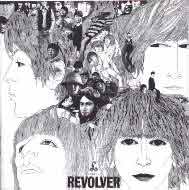 Oft wird ja gesagt, "Sgt. Pepper"
wäre das amtliche Beatlesalbum. Die Metamorphose der Beatles von
einer "Popgruppe" zu "ernsthaften" Künstlern
begann aber bereits auf diesem Album. Enthält mit "She Said"
eines meiner Lieblingslieder von MacLen und mit "T.N.K." eine
erste indisch angehauchte Nummer.
Oft wird ja gesagt, "Sgt. Pepper"
wäre das amtliche Beatlesalbum. Die Metamorphose der Beatles von
einer "Popgruppe" zu "ernsthaften" Künstlern
begann aber bereits auf diesem Album. Enthält mit "She Said"
eines meiner Lieblingslieder von MacLen und mit "T.N.K." eine
erste indisch angehauchte Nummer.
Mehr ...
|
"I don't see too much difference between Revolver and Rubber Soul,"
George Harrison once said. "To me, they could be Volume One and Volume
Two." Revolver extends the more adventurous aspects of its predecessor
-- its introspection, its nascent psychedelia, its fascination with the
possibilities of the studio -- into a dramatic statement of generational
purpose. The album, which was released in August 1966, made it thrillingly
clear that what we now think of as "the Sixties" was fully --
and irreversibly -- under way.
Part of that revolutionary impulse was visual. Klaus Voormann, one of
the Beatles' artist buddies from their days in Hamburg, Germany, designed
a striking photo-collage cover for Revolver; it was a crucial step on
the road to the even trippier, more colorful imagery of Sgt. Pepper's
Lonely Hearts Club Band, which would come less than a year later.
And then there's the music. The most innovative track on the album is
John Lennon's "Tomorrow Never Knows." Attempting to distill
an LSD trip into a three-minute song, Lennon borrowed lyrics from Timothy
Leary's version of The Tibetan Book of the Dead and recorded his vocal
to sound like "the Dalai Lama singing from the highest mountaintop."
Tape loops, a backward guitar part (Paul McCartney's blistering solo on
"Taxman," in fact) and a droning tamboura completed the experimental
effect, and the song proved hugely influential. For his part, on "Eleanor
Rigby" and "For No One," McCartney mastered a strikingly
mature form of art song, and Harrison, with "Taxman," "I
Want to Tell You" and "Love You To," challenged Lennon-McCartney's
songwriting dominance.
Revolver, finally, signaled that in popular music, anything -- any theme,
any musical idea -- could now be realized. And, in the case of the Beatles,
would be.
Total album sales: 5 million
Peak chart position: 1
(Rolling Stone)
|
|
| Paul Butterfield Blues Band: "East-West" (Elektra, Aug. 1966) |
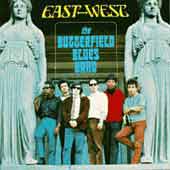 Wenn man diese Platte als reine Bluesplatte einordnet, wird man ihr kaum gerecht.
Wir hören in Alan Toussaints "Get Out My Life" New
Orleans, mit Nat Adderleys "Worksong" von Jazzklänge
und im Titelsong 10 Minuten lang eine der ersten, auf "Rockplatten"
verewigten, indisch angehauchten Jams. Vielleicht war die Paul Butterfield
Blues Band ja sogar eine der ersten "Jambands"?
Wenn man diese Platte als reine Bluesplatte einordnet, wird man ihr kaum gerecht.
Wir hören in Alan Toussaints "Get Out My Life" New
Orleans, mit Nat Adderleys "Worksong" von Jazzklänge
und im Titelsong 10 Minuten lang eine der ersten, auf "Rockplatten"
verewigten, indisch angehauchten Jams. Vielleicht war die Paul Butterfield
Blues Band ja sogar eine der ersten "Jambands"? |
| Donovan: "Sunshine Superman" (PYE, Sept. 1966) |
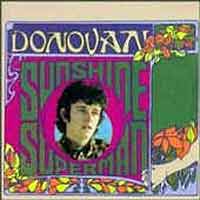 Von vielen aus meiner Generation wird Donovan nicht sonderlich ernst genommen,
gilt er doch als Weichei oder "Dylan für Arme". Sicherlich
ist auch der eine oder andere von uns mit solchen Liedern wie "Catch
The Wind" oder "Donna, Donna" gequält worden (wobei
die Schuld an der Weiterverbreitung des Volxliedes "Donna, Donna"
in den 70ern (=meine Zeit) eher Peter Bursch als Donovan selber anzulasten
ist. Für mich gibt es aber zwei Dinge auf der Plusseite von Donovan:
zum einen das schöne Comeback vor einigen Jahren auf Rick Rubin's
American-Label (vielleicht nicht ganz so gewaltig, wie das von Johnny
Cash im gleichen Stall), zum anderen dieses "Hippie"-Album mit
dem Killer-Song "Season Of The Witch": ein zeitloser Klassiker.
Von vielen aus meiner Generation wird Donovan nicht sonderlich ernst genommen,
gilt er doch als Weichei oder "Dylan für Arme". Sicherlich
ist auch der eine oder andere von uns mit solchen Liedern wie "Catch
The Wind" oder "Donna, Donna" gequält worden (wobei
die Schuld an der Weiterverbreitung des Volxliedes "Donna, Donna"
in den 70ern (=meine Zeit) eher Peter Bursch als Donovan selber anzulasten
ist. Für mich gibt es aber zwei Dinge auf der Plusseite von Donovan:
zum einen das schöne Comeback vor einigen Jahren auf Rick Rubin's
American-Label (vielleicht nicht ganz so gewaltig, wie das von Johnny
Cash im gleichen Stall), zum anderen dieses "Hippie"-Album mit
dem Killer-Song "Season Of The Witch": ein zeitloser Klassiker. |
| Bert Jansch: "Jack Orion" (Transatlantic, Sept. 1966) |
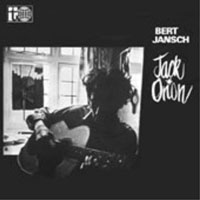 Das dritte Soloalbum des damals noch zukünftigen Pentangle-Gitarristen,
begleitet auf den meisten Liedern von seinem zukünftigen Bandkollegen
John Renbourn. Drei Lieder möchte ich besonders hervorzuheben:
"Jack Orion" gibt es hier mit zwei Gitarren in fast 10 Minuten
Länge (wird später noch mals von Pentangle auf dem Album
"Cruel Sister" sogar
in einer fast 20minütigen Version aufgenommen!), "Nottamun Town"
wird wenig später von Fairport Convention auf deren Album
"What We Did On Our Holidays"
veredelt und "Black Water Side" entwickelt sich im Laufe der
Jahre zu einem Bert Jansch-Klassiker.
Das dritte Soloalbum des damals noch zukünftigen Pentangle-Gitarristen,
begleitet auf den meisten Liedern von seinem zukünftigen Bandkollegen
John Renbourn. Drei Lieder möchte ich besonders hervorzuheben:
"Jack Orion" gibt es hier mit zwei Gitarren in fast 10 Minuten
Länge (wird später noch mals von Pentangle auf dem Album
"Cruel Sister" sogar
in einer fast 20minütigen Version aufgenommen!), "Nottamun Town"
wird wenig später von Fairport Convention auf deren Album
"What We Did On Our Holidays"
veredelt und "Black Water Side" entwickelt sich im Laufe der
Jahre zu einem Bert Jansch-Klassiker.
(31.12.2016) |
| "Chicago/The Blues/Today!" (Vanguard, Okt. 1966) |
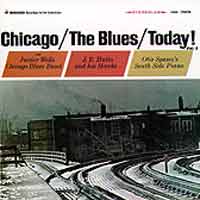 Für mich einer der besten Bluessampler, den es gibt. Produzent Sam Charters hatte
nicht einfach irgendwelche vorhandene Aufnahmen zusammengestellt, sondern im Dezember1965 drei
Bands bzw. Solisten ins Studio geholt, die jeweils 4-5 Lieder einspielten.
Als erstes ist das die Junior Wells Chicago Bluesband
mit Buddy Guy (g), Fred Below (dr) und Jack Myers
(bg). Wir hören "Help Me" von Sonnyboy Williamson II, "Messin'
With The Kid" von Mel London (Rory Gallagher: Eat your heart out!),
"It Hurts Me, Too" (Elmore James), "Rock Me Baby"
(B.B.King) und den beeindruckenden eigenen Titel "Vietcong Blues",
der schon alleine den Kauf der Platte rechtfertigt.
Für mich einer der besten Bluessampler, den es gibt. Produzent Sam Charters hatte
nicht einfach irgendwelche vorhandene Aufnahmen zusammengestellt, sondern im Dezember1965 drei
Bands bzw. Solisten ins Studio geholt, die jeweils 4-5 Lieder einspielten.
Als erstes ist das die Junior Wells Chicago Bluesband
mit Buddy Guy (g), Fred Below (dr) und Jack Myers
(bg). Wir hören "Help Me" von Sonnyboy Williamson II, "Messin'
With The Kid" von Mel London (Rory Gallagher: Eat your heart out!),
"It Hurts Me, Too" (Elmore James), "Rock Me Baby"
(B.B.King) und den beeindruckenden eigenen Titel "Vietcong Blues",
der schon alleine den Kauf der Platte rechtfertigt.
Otis Spann spielt Boogie-Piano und läßt sich ganz sparsam
nur von Schlagzeuglegende Fred Below begleiten. Dazu kommt dann
noch der etwas bizarre Slidegitarrist J. B. Hutto. Die Platte war
damals sehr erfolgreich und wurde zu einer Serie mit mehreren Folgen ausgebaut.
Mehr ...
The first volume in the groundbreaking, definitive series Chicago: The Blues Today! contains selections from J.B. Hutto, Junior Wells and Otis Spann. All three contribute stellar performances, but for Hutto it's truly the place to start, because it doesn't get much better than this; "Too Much Alcohol," "Please Help," "Going Ahead" and "That's The Truth" are all classics, and Hutto is in perfect form throughout, with swinging support from the Turner's Blue Lounge version of the Hawks, bass-rhythm guitarist Herman Hassell and former Bo Diddley drummer Frank Kirkland. Sound is crystal clear.
(by Cub Koda, All Music Guide)
|
| "Buffalo Springfield" (Atco, Dez. 1966 und Feb. 1967) |
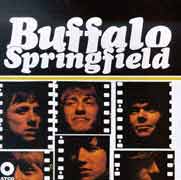 Stephen Stills und Neil Youngs erste Grosstat in jungen
Jahren. U.a. mit dem Hit "For What It's Worth".
Stephen Stills und Neil Youngs erste Grosstat in jungen
Jahren. U.a. mit dem Hit "For What It's Worth". |
| "Tim Buckley" (Elektra, Dez. 1966) |
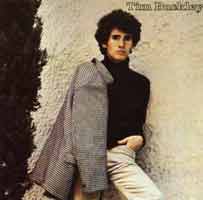 Bei seiner Debütplatte war Tim gerade mal 19 Jahre jung. Gesanglich und
kompositorisch schon auf höchstem Niveau, ist der Gesamtsound hier
aber noch relativ konventionell. Erst auf den folgenden Platten löst
er sich von diesen Fesseln.
Bei seiner Debütplatte war Tim gerade mal 19 Jahre jung. Gesanglich und
kompositorisch schon auf höchstem Niveau, ist der Gesamtsound hier
aber noch relativ konventionell. Erst auf den folgenden Platten löst
er sich von diesen Fesseln. |
| John Coltrane: "Meditations" (Impulse!, 1966) |
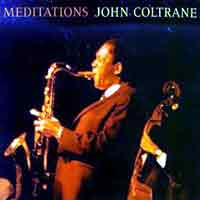
Mehr ...
|
GOD, affirmed the legendary Russian ballet dancer Vaslav Nijinsky, is
a fire in the brain. Saxophonist John Coltrane's ecstatic jazz, from 1964's
seminal A Love Supreme onwards, is the sound
of these flame-ravaged synapses in celestial communion. By the time of
Meditations - which he originally cut with his classic quartet under the
title First Meditations - the John Coltrane Orchestra had swollen to a
sextet. Alongside drummer Elvin Jones, pianist McCoy Tyner and bassist
Jimmy Garrison were two controversial new recruits - second drummer Rashied
Ali and the wildest tenor saxophonist of his generation, Pharaoh Sanders.
Like A Love Supreme, 1965's Meditations feels almost like a live seance,
with all of the musicians playing from their soul in an attempt to break
on through to the other side. At points it sounds like an evangelical
revival, with Pharaoh and Trane's tenors seeming to speak in tongues.
Ali and Jones drum so hard it feels like they're trying to stop time,
while the bass and piano dance in the spaces between. Though there are
moments of serenity, Meditations is by no means easy listening, but if
it's a spiritual experience you're after then this'll blow the cobwebs
from your brain for good.
|
|
| "Fred Neil" (Capitol, 1966) |
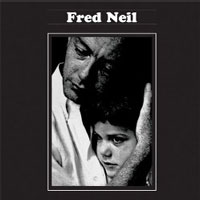 Einer der Kultfiguren der frühen New Yorker Folkszene, Vorbild für
viele Nachfolger (u. a. Tim Buckley, Bob
Dylan und David Crosby), Autor
zweier der schönsten Lieder aus dieser Zeit (natürlich "The
Dolphins" und "Everybody's Talkin'"), aber selber ohne
den großen Durchbruch. Nach diesem tollen Album #3 (eine Duoplatte von
1964 mitgerechnet), gab's danach nur noch Live- und Sessionaufnahmen.
Danach verschwand Fred Neil zurück nach Florida in die Anonymität
und verstarb vor einigen Jahren an Krebs, ohne dass davon viel in der
Presse zu lesen war.
Einer der Kultfiguren der frühen New Yorker Folkszene, Vorbild für
viele Nachfolger (u. a. Tim Buckley, Bob
Dylan und David Crosby), Autor
zweier der schönsten Lieder aus dieser Zeit (natürlich "The
Dolphins" und "Everybody's Talkin'"), aber selber ohne
den großen Durchbruch. Nach diesem tollen Album #3 (eine Duoplatte von
1964 mitgerechnet), gab's danach nur noch Live- und Sessionaufnahmen.
Danach verschwand Fred Neil zurück nach Florida in die Anonymität
und verstarb vor einigen Jahren an Krebs, ohne dass davon viel in der
Presse zu lesen war.
Die Musik? Natürlich schon sehr "folky", aber vor allem
geprägt von seiner tollen Baritonstimme. Irgendwo zwischen seinem
"Fan" Tim Buckley (wenn der mal tief
sang) und Johnny Cash.
(Dez. 2006) |
| Junior Wells Chicago Blues Band: "Hoodoo Man Blues" (Delmark, 1966) |
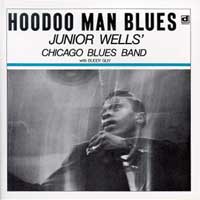 Junior Wells Debütalbum wird zu recht als ein Klassiker und Höhepunkt
des elektrischen Chicago Blues bezeichnet. Mit Buddy Guy an der
Gitarre. Nicht nur etwas für Bluespuristen, auch wenn das natürlich
purer Blues!
Junior Wells Debütalbum wird zu recht als ein Klassiker und Höhepunkt
des elektrischen Chicago Blues bezeichnet. Mit Buddy Guy an der
Gitarre. Nicht nur etwas für Bluespuristen, auch wenn das natürlich
purer Blues!
Mehr ...
Dieses 1965er Album zeigt Sänger und Harmonikaspieler Junior Wells als Solist. Bei dieser frühen Zusammenkunft mit Buddy Guy summieren die beiden den Funk-Rock-Blues der Sechziger, der noch kommen sollte. Hoodoo Man Blues inspirierte Paul Butterfield, Eric Clapton und eine Menge anderer Musikfans. Wells und Guy scheuen nicht vor James Brown-funkifiziertem Blues oder kantigem Rock zurück, aber auch nicht vor traditionellem Blues. Ihre Version von "Good Morning Little School Girl" ist ein korrektes Update: immer noch bedrohlich, aber etwas weniger im Country Blues-Feeling. Nicht zu versäumen ist auch das instrumentale "Chitlin Con Carne".
(Robert Gordon, Amazon.de-Redaktion)
One of the truly classic blues albums of the 1960s, and one of the first to fully document the smoky ambience of a night at a West side nightspot in the superior acoustics of a recording studio. Wells just set up with his usual cohorts — guitarist Buddy Guy (billed as "Friendly Chap" on first vinyl pressings), bassist Jack Myers, and drummer Billy Warren — and proceeded to blow up a storm, bringing an immediacy to "Snatch It Back and Hold It," "You Don't Love Me," "Chitlin Con Carne," and the rest that is absolutely mesmerizing.
(by Bill Dahl, All Music Guide)
We have tried to capture on this album what a listener would hear any monday night at Theresa's Blues Bar (now defunct) at 48th and Indiana on Chicago's Southside. The blue Monday regulars, includng Buddy Guy are joined by the late Otis Spann, the greatest blues pianist of his generation, making his last studio appearance and to whom this album is respectfully dedicated by Junior, the musicians, and ... the Delmark staff.
|
| Larry Young: "Unity" (Blue Note, 1966) |
 [Joe Henderson]
Mehr ...
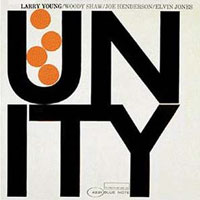
Größtes Album des für mich und viele andere besten Jazzorganisten ever ("Coltrane der Orgel"), der u.a. mit Hendrix jammte, bei Miles´ Bitches Brew dabei war. Post Bop, nicht so abenteurlich wie andere Blue Note-Acts der Zeit (Andrew Hill, Dolphy..), aber schon avanciert, Traditionen brechend. Und melodisch (auch die Soli), z.T. ausgesprochen markant! Eleganz, Finesse, Virtuosität und perfektes Zusammenspiel vereinen sich zu einem durchweg ziemlich schnellen auf delikate Weise swingenden Meisterwerk. Toller leichtfüßiger quecksilbriger Hammond-Ton, Coltrane-beeinflußtes Sax (Joe Henderson!), klasse Trompete (W.Shaw), flexible elastische quirlige grandiose Drums (Elvin Jones!; wunderbare kristalline Beckenarbeit!). Penguin Guide (wie auch All Music Guide u.v.a.) vergab die sehr seltene Höchstwertung. Rudy Van Gelder-24-Bit-remastered-Edition.
(Glitterhouse)
On his sophomore date as a leader, jazz organist Larry Young began to display some of the angular drive that made him a natural for the jazz-rock explosion to come barely four years later. While about as far from the groove jazz of Jimmy Smith as you could get, Young hadn't made the complete leap into freeform jazz-rock either. Here he finds himself in very distinguished company: drummer Elvin Jones, trumpeter Woody Shaw, and saxman Joe Henderson. Young was clearly taken by the explorations of saxophonists Coleman and Coltrane, as well as the tonal expressionism put in place by Sonny Rollins and the hard-edged modal music of Miles Davis and his young quintet. But the sound here is all Young: the rhythmic thrusting pulses shoved up against Henderson and Shaw as the framework for a melody that never actually emerges ("Zoltan" — one of three Shaw tunes here), the skipping chords he uses to supplant the harmony in "Monk's Dream," and also the reiterating of front-line phrases a half step behind the beat to create an echo effect and leave a tonal trace on the soloists as they emerge into the tunes (Henderson's "If" and Shaw's "The Moontrane"). All of these are Young trademarks, displayed when he was still very young, yet enough of a wiseacre to try to drive a group of musicians as seasoned as this — and he succeeded each and every time. As a soloist, Young is at his best on Shaw's "Beyond All Limits" and the classic nugget "Softly as in a Morning Sunrise." In his breaks, Young uses the middle register as a place of departure, staggering arpeggios against chords against harmonic inversions that swing plenty and still comes out at all angles. Unity proved that Young's debut, Into Somethin', was no fluke, and that he could play with the lions. And as an album, it holds up even better than some of the work by his sidemen here.
(by Thom Jurek, All Music Guide)
Hailed as the organ-playing equivalent to John Coltrane, Newark’s Larry Young offered a different approach to the Hammond B3 from the likes of blues-based label mates, Jimmy Smith and Big John Patton. Recorded in 1965, Unity is a masterpiece that represents the apotheosis of Young’s modal jazz aesthetic. Assisting in bringing his musical vision to life were saxophonist Joe Henderson, trumpeter Woody Shaw – who contributes three tunes, including the Coltrane-inspired “The Moontrane” – and powerhouse drummer Elvin Jones.
(www.udiscovermusic.com)
|
 Das Album des Jahres
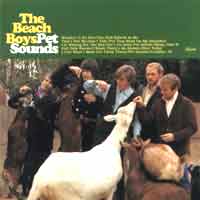 Was soll man zu Brian Wilsons Meisterwerk noch viel sagen? Das
wäre so, als müsste man Eulen irgendwo in Griechenland ausliefern.
Von mir wurde das Album aber erst Mitte der 90er "entdeckt"
und dann ins Herz geschlossen. Brian Wilson hat übrigens auf seinem
Hamburger Konzert vom Januar 2002 die komplette Platte "aufgeführt".
Da wäre ich gerne dabei gewesen!
Was soll man zu Brian Wilsons Meisterwerk noch viel sagen? Das
wäre so, als müsste man Eulen irgendwo in Griechenland ausliefern.
Von mir wurde das Album aber erst Mitte der 90er "entdeckt"
und dann ins Herz geschlossen. Brian Wilson hat übrigens auf seinem
Hamburger Konzert vom Januar 2002 die komplette Platte "aufgeführt".
Da wäre ich gerne dabei gewesen!
 weitere Highlights ...
(2006-04-14)
Immer gut für tolle Cover ist auch das Jazzlabel Blue Note, obwohl "Cape Verdean Blues" nicht unbedingt das typische Blue-Note Cover hat. Das Foto wurde von Reid Miles geschossen. Das Horace Silver Quintet war eine der erfolgreichsten Combos des Labels in den 6oern.
(2006-04-27)