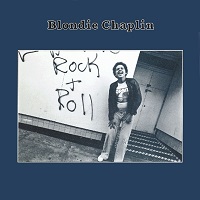
"Rock and roll" is scrawled across of the front of this late-'70s album, but it appears to be simply some well-chosen graffiti in the photograph and not the actual album title. It would have been both generic and appropriate if that had been the choice rather than simply Blondie Chaplin as a title for the debut solo effort from an artist better known for his collaborative efforts with such large-scale cheeses as the Rolling Stones. "It's only rock & roll but I like it," was one of the latter band's mantras. Such is the nature of this walloping musical style that listeners could have completely missed out on Chaplin -- indeed, many did -- and really not have missed a thing. At least in terms of this album: although certainly groovy, it doesn't contain a lick that any amount of exposure to '60s and '70s rock wouldn't have already served up. These would be many of the stylistic trademarks of this era, particularly the later years and the temporarily hip Asylum label, aspects that will evoke smiles or fits of vomiting depending on the audience's aesthetic. To continue the crude comparison to digestive processes, this menu highlights tight arrangements, what they used to call "chick singers" (think "Hummingbird," meticulous horn sections, and a mixture of soul and pop flavors that was only possible in an era when these dishes were constantly served back to back on radio stations). Often, however, when a song seems like it is over or an instrumental break not really necessary, here comes the waiter with a dessert tray featuring an assortment of sweet lead guitar solos. One reason this record sounds like so many others is that the people that played on those other records are on this one, too. That includes Dave Mason of Traffic fame, Garth Hudson of the Band, and legendary session keyboardist Richard Tee. The South African Chaplin seems obsessed not with sounding different than the heroes of the day, but rather with being able to duplicate any of them at will, a talent that deserves plenty of praise. He can sing like John Fogerty or Spencer Davis yet also shines on complex copies of the Beatles. In light of what was happening on the music scene in the '70s, Chaplin must have just seemed like someone whose performances were fun but who never established a sound that he could call his own. Future hitmakers who relentlessly plunder the '60s and '70s make him look good in retrospective -- his tracks sound just as good, if not better, than anything recorded in 2004. Note: the title "For Your Love" is a Chaplin original, like everything else on the album, not a cover of the great song by the Yardbirds.
(by Eugene Chadbourne, All Music Guide)
Terence William "Blondie" Chaplin, originally with the South African soul-cover band The Flames, best known as guitarist and singer in the Beach Boys from 1972 to 1974 and for his session-work with the Rolling Stones, joined the Band when they went back on the road after Richard Manuel's death in 1986. Singing Richard's vocal parts, and doubling on guitar and drums, Blondie Chaplin stayed with the Band until the tour was over at the end of the year. Chaplin also played on Rick Danko's first solo album and on the Band's 1996 release High on the Hog. In the early '80s, Blondie Chaplin worked with Rick Danko and members of the Byrds, doing a "Byrds reunion" tour.
Garth Hudson's accordion can be heard on the track "Riverboat Queen" from Chaplin's self-titled 1977 Asylum effort. Blondie Chaplin was re-released on CD by Wounded Bird Records in 2008, two years after his second solo album Between Us came out on the Big Karma label.
Blondie Chaplin is bursting with energy, and the list of guest musicians is impressive, featuring amongst others Richard Tee and Garth. The drums are played by none other than old Flames and Beach Boys ally, Ricky Fataar. The album is dedicated to Henry Chaplin, shown in an old sepia coloured photo, playing a banjo. Presumably this is Blondie's father, providing the musical heritage. On the whole the album has a overproduced feel, with Blondie trying to find his own musical direction. There are a few stand-out tracks, like "Can You Hear Me," with its backward guitar solo and "Lonely Traveler" with its atmospheric piano introduction. But on the whole, the album would have benefited from a looser, more open mix or perhaps even a live recording. The album's main flaw is that Blondie Chaplin is trying to write songs in an existing mold. He is deliberately writing for his audience, instead of for himself, and catering for what he believes they want. Still it makes a good listen, even after more than a quarter of a century.
(theband.hiof.no)

 Plattentipp
